

Pooja Choudhary
Financial technology (also called Fintech) is often used to describe any new tech that contributed towards the improvement and automation of financial services. At its core, fintech is used to help organizations, entrepreneurs, and customers better deal with their financial services, processes, and lives by using particular software and algorithms. Fintech is a mix of “financial technology.”Examples are Robo-advisors, payments applications, peer-to-peer (P2P) lending, investment applications, and crypto applications. Since we have an idea about fintech, let’s now talk about fintech startups.
What Is A Fintech Startup?
A fintech startup is a company that generally depends on technological advancements to address the niche segment and turn them into its prospective client list. They typically try to transform any traditional method with the help of databases and algorithms and make life easier and safer. Although at the initial funding level they have struggled as we can see in the exhibit below the three stages of funding along with a few recent examples.
Read: Global Fintech Interview with Mark Fidelman, Chief Executive Officer at SmartBlocks
Startup Success Rate In the USA
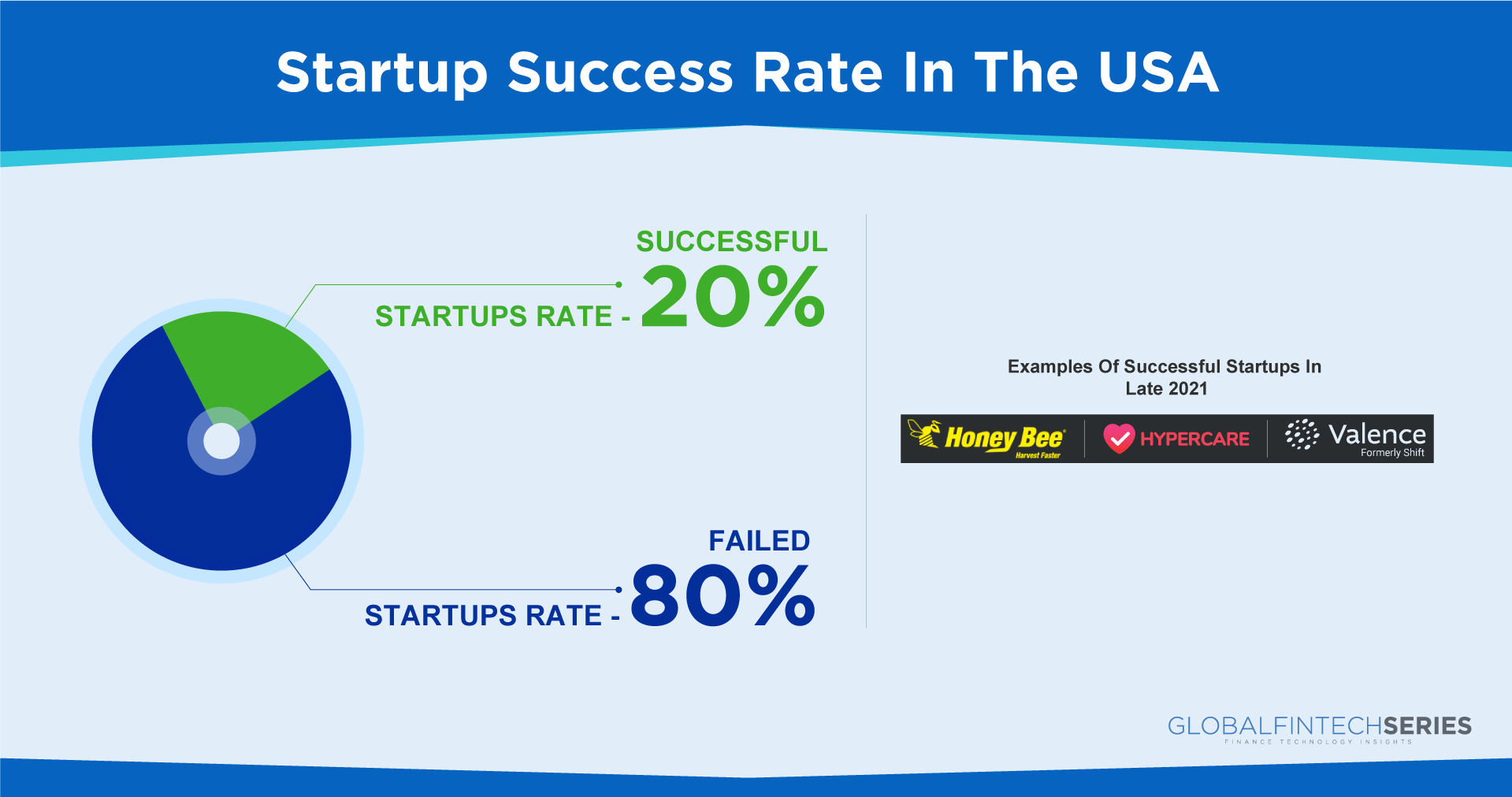
New business statistics reveal that the new startups’ rate diminished in Q4 with over 1.1 million U.S. organizations, then raised again to 1.37 million in the principal quarter of 2021 and afterward to 1.44 million in the second quarter. The level of new companies that flop in their most memorable years in the USA is more than 80%. It implies the achievement rate is around 20%. Among the best instances of American new businesses in 2021 are: SHIFT is a digital coach for remote teams. It helps leaders to connect, evolve their culture, and build effective virtual teams.
-
The honeybee is a FinTech company, that takes care of the financial wellness of employees.
-
Hypeercare is real-time healthcare coordination for medical specialists.
Startup Success Rate in the UK
UK tech startups face growth and leap miles, with £17.8b of value venture raised between January and October 2021. The level of new companies that flop in their most memorable years in the UK is more than 70%. It implies the achievement rate is around 30%. Among the best instances of English new companies in 2021 is: FinTech startup SumUp provides a payment processing system for small businesses and offers business owners to accept secure card payments.
 Why Do Tech Startups Fail?
So far we have discussed a lot about startups but the foremost overview unfolded yet is in the context that why tech startups fail rather we can say what are the primary reasons for their failure.
|
Reason |
Description |
|
Lack of market demand |
Sometimes the startups fail to have a transparent perception about was exactly what the clients want. They manage to tackle issues that are fascinating just to the organization. |
|
Lack of funds |
The funds and time with such startups are quite limited. Hence, it is mandatory to carefully utilize them and make cost valuations or attract additional startup funding. |
|
Inappropriate team |
An ideal startup team should comprise members with diverse skills. If the company fails, the co-founders often complain about mistakes while choosing apt specialists. |
|
Competition |
When a startup generates an idea and works towards its target after getting acceptance in the market about its idea; then many other competitors also suddenly turn up and start working on it which creates mental pressure. |
|
Pricing |
The cost of a product or service of the startup should cover its basic cost structure, but at the same time, it should remain affordable and satisfactory to its customers. |
|
User-unfriendly product
|
At times the problem arises because of the non-compatibility of the product idea or usage with their customers.
|
|
Lack of business model |
If a company has only one channel or it is yet to find a way to make money on its product offerings, then investors are unlikely to accept it. So backup plans and diversification is expected for startups as a fool-proof plan. |
|
Poor Marketing Strategy |
It is expected for a startup to understand its prospective client base so that it can turn them into loyal customers through its offerings. If no few are knowing about their product, then it hardly matters how good the product is. |
|
Ignoring customers |
It doesn’t make any difference that the makers think their item is awesome – the crowd must have a similar opinion. The organization should consider the clients’ input and adjust to it. |

What Does Fintech Hold For The Future?
Despite of the ongoing financial vulnerability, bigger and long-haul patterns for the future of fintech remain moderately in one piece. Consolidation, partnerships, and continued collaborations between legacy banks and fintech appear to be far more appealing. And consumers are expecting to see the growth and emergence of such start-ups; examples include blockchain, cryptocurrency, artificial intelligence, and peer-to-peer transactions. Consumers, businesses, and a wide range of financial services firms are progressively into innovation.
Read: Global Fintech Interview with Jitin Bhasin, Founder & CEO at SaveIN

