

Read on to find out what are the changes made to the ITR-V and acknowledgement forms, and what taxpayers should know.
Changes made to ITR-V and acknowledgement forms
According to tax experts, major changes have not been made to both forms, however, now one needs to be mindful of the submission of ITR-V to avoid penal consequences. Abhishek Soni, CEO, Tax2win.in – an ITR filing website says, “Effectively, the notified ITR-V and acknowledgement forms are similar to the ones used in the previous years. However, taxpayers need to ensure that their ITR-V reaches the income tax department on time or else, penal consequences of late filing of ITR can apply.”
The newly notified ITR-V has added two instructions for the taxpayers which are as follows:
- Where ITR data is electronically transmitted and ITR-V is submitted within 30 days of transmission of data- in such cases the date of transmitting the data electronically shall be considered as the date of furnishing the return of income.
- Where ITR data is electronically transmitted but ITR-V is submitted beyond the time limit of 30 days of transmission of data, in such cases the date of ITR-V submission shall be treated as the date of furnishing the return of income and all consequences of late filing of return under the Income-tax Act, 1961 shall follow.
This would mean that if a taxpayer verifies the income tax return within 30 days of filing it, then the date of submission of the ITR form will be taken as the date of filing ITR. However, if the income tax return form is verified after 30 days, then the date of verifying the ITR will be taken as the date of filing income tax return. In such a case, the consequence of late filing of ITR can be applicable.
Soni explains this with an example. Suppose, a taxpayer submits the income tax return form on the e-filing portal on June 20. After submitting the ITR form, a taxpayer has 30 days to verify the submitted ITR form. The verification can be done electronically using Aadhaar OTP or any other method or by sending a physical copy of ITR-V to CPC, Income Tax Department Bengaluru. Now if the taxpayer verifies the ITR by July 15 (before completing 30 days), then the date of filing the ITR will be June 20. However, if the ITR is verified say on July 25, then the date of ITR filing will be July 25. Here the date of ITR filing is before the deadline of July 31, then it is likely that no penal consequences for late filing will apply. However, if the ITR is verified on August 1, then late filing penalty can apply.
What are the consequences of late filing of ITR?
If an individual files their income tax return after the expiry of the deadline of July 31 (or as specified by the government), then such tax return is called a belated ITR. An individual filing a belated ITR is required to pay a late filing fee of up to Rs 5,000. Along with late filing fees, an individual is required to pay penal interest on pending tax amount, if any.A taxpayer will lose out on the option to choose the desired tax regime if belated ITR is filed. A taxpayer can choose the desired tax regime only if the ITR is filed on or before the deadline.
Important Notice: Updated ITR-V and ITR Acknowledgement Forms Released – Avoid Penalties by Reviewing Instructions Thoroughly
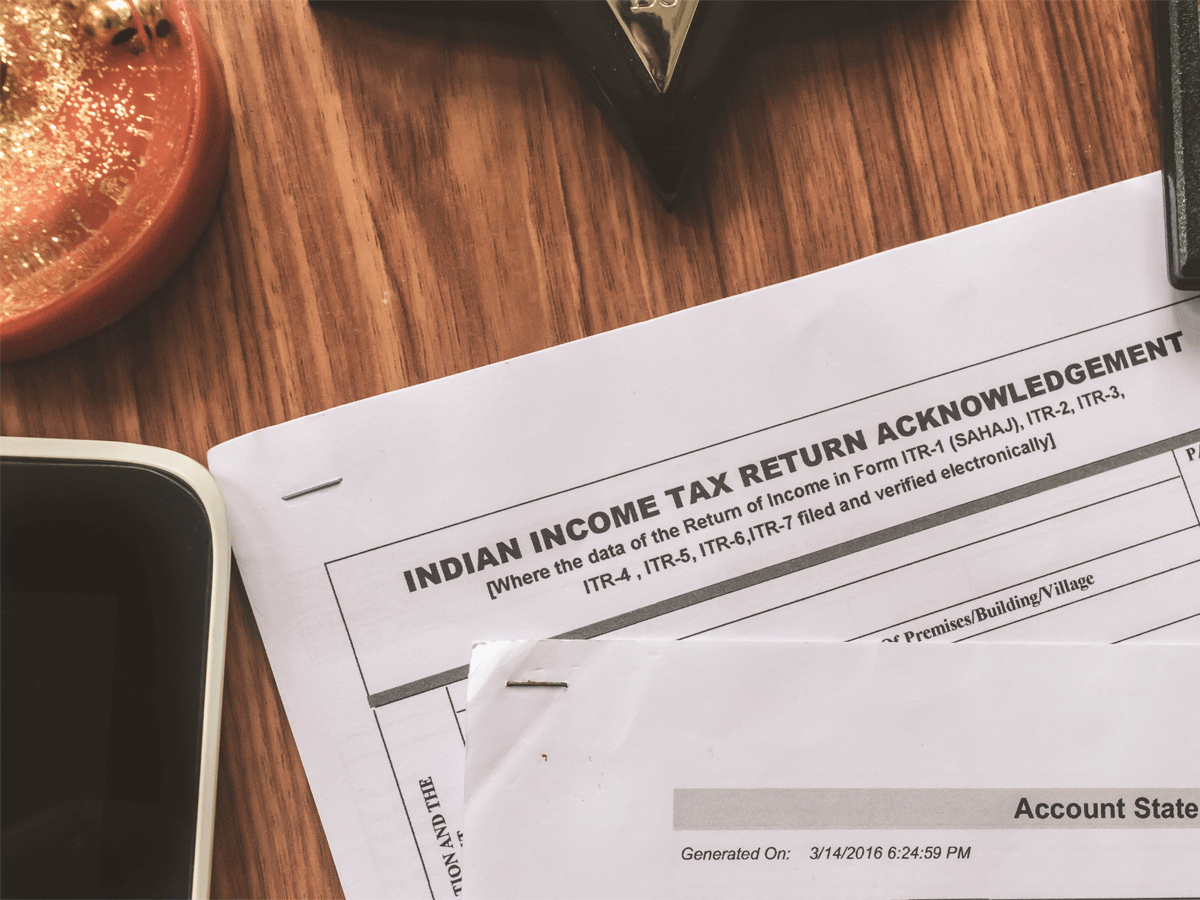
The Central Board of Direct Taxes (CBDT) has issued a notification regarding changes in the ITR-V and acknowledgement forms. This notification, as reported on the e-gazette portal, is in response to amendments made in the Income Tax Act, 1961, during the Budget 2023. Released on March 27, 2024, the CBDT notification will take effect from April 1, 2024.
Find out more about the alterations made to the ITR-V and acknowledgement forms as well as what taxpayers need to be aware of.
Changes in ITR-V and Acknowledgement Forms
Tax experts suggest that while there are no significant changes in both forms, it is crucial for individuals to ensure the timely submission of ITR-V to avoid penalties. According to Abhishek Soni, CEO of Tax2win.in, the newly notified ITR-V and acknowledgement forms are similar to the previous years’ versions. However, taxpayers must make sure that their ITR-V reaches the income tax department promptly to avoid penalties for late filing.
The updated ITR-V includes two additional instructions for taxpayers:
- If ITR data is electronically transmitted and ITR-V is submitted within 30 days, the date of electronic transmission will be considered as the filing date.
- If ITR data is electronically transmitted but ITR-V is submitted after 30 days, the submission date will be considered as the filing date with late filing consequences.
For instance, if a taxpayer submits their income tax return on June 20 and verifies it by July 15, the filing date will be considered as June 20. However, if verification is done on July 25, then the filing date will be July 25. Late filing penalties may apply in the latter case.
Consequences of Late Filing of ITR
Filing an income tax return after the deadline (typically July 31) results in a belated ITR. Late filing fees of up to Rs 5,000 and penal interest on pending tax may be charged. Choosing a tax regime is only possible if the ITR is filed before the deadline.

