
Jai Hamid
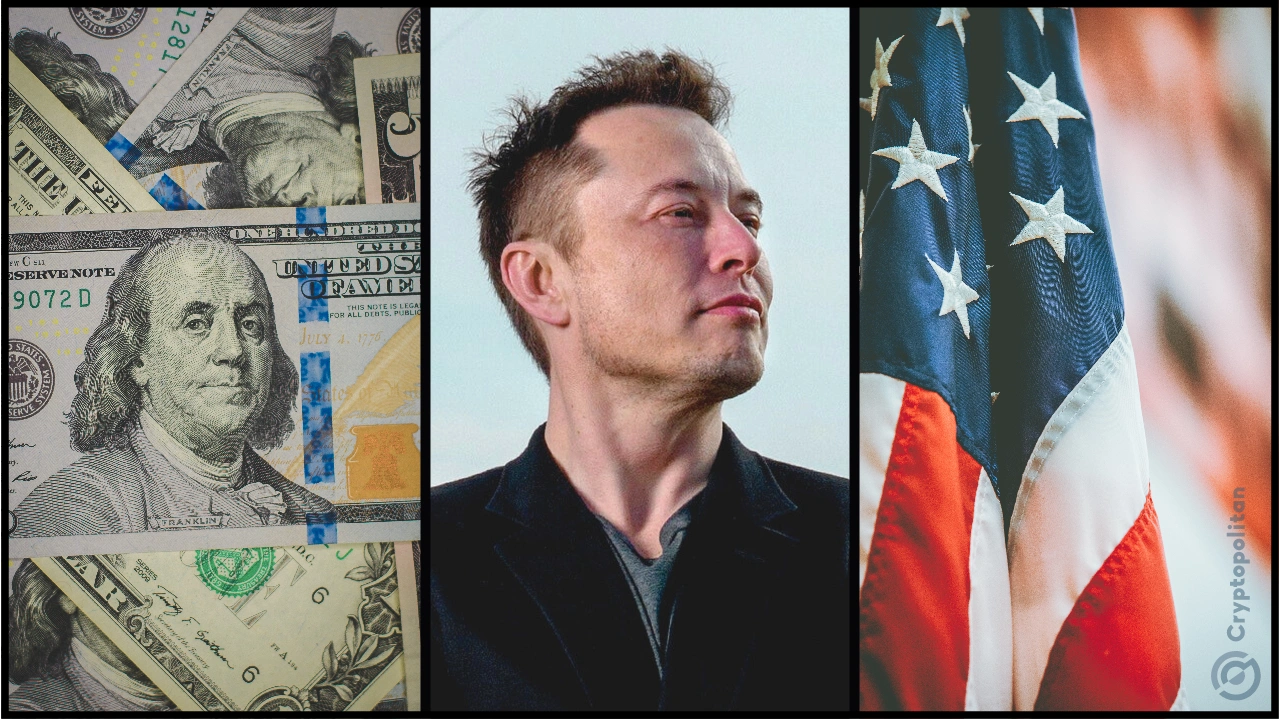
Elon Musk dropped a financial truth bomb recently, saying all government spending is taxation. Whether it’s drained directly through income taxes or silently stolen via inflation, taxpayers are footing the bill.
This statement came in response to Dogecoin creator Billy Markus, who warned about the government overspending by $2 trillion annually for eight straight years. Markus said: “Any company that ran like that would fail. Any person that lived like that would be beyond bankrupt.”
Elon agreed, calling out the real cost of Washington’s spending spree. Now the man has more than just words to offer. With Donald Trump getting back in the Oval, Elon has been named co-head of the new Department of Government Efficiency (D.O.G.E) alongside biotech investor Vivek Ramaswamy.
His mission? Slash federal spending by $2 trillion. That’s nearly 30% of the government’s total $6.75 trillion budget from the 2023 fiscal year. If Elon’s Twitter layoffs are anything to go by, we’re in for a brutal teardown of waste and inefficiency.
The U.S. budget: A house of cards
Breaking down the U.S. government’s budget makes Elon’s goal look like trying to move a mountain. Let’s start with the $880 billion spent on interest payments for the national debt. That’s 13% of the total budget and completely untouchable unless the government wants to default.
Social Security, a sacred cow in American politics, eats up $1.46 trillion—22% of total spending—making it another no-go zone for cuts. Add Medicare, the lifeline for seniors, to the mix, and most of the federal budget is locked down in mandatory expenses.
What’s left is discretionary spending, the part of the budget Congress can tweak each year. That totaled $1.7 trillion in 2023, accounting for about 25% of federal spending. Defense alone sucked up $874 billion—over half of all discretionary funds.
The rest went to education, transportation, and other programs like Homeland Security. Elon wants to chop $2 trillion, but even if the government zeroed out all discretionary spending, it still wouldn’t hit his target. It’s like trying to drain a pool with a teaspoon.
Still, the eccentric billionaire is determined to try. Speaking at a Trump rally in New York last month, he said it was possible to cut “at least $2 trillion” by eliminating waste. He thinks entire agencies could be scrapped if they don’t serve a critical purpose.
He might be thinking about the countless federal programs bogged down by bureaucracy and inefficiency, but some economists say his math doesn’t add up.
Trump’s mixed signals on spending
Elon’s plans aren’t exactly aligned with Trump’s promises. On the campaign trail, the president pledged to make Social Security more generous by removing taxes on benefits, and that would add to costs, not reduce them.
He also wants to ramp up defense spending to build an “iron dome missile defense shield,” which isn’t going to save money either. So while Elon talks about cuts, Trump’s plans suggest the opposite.
This tug-of-war isn’t new for Washington. Republican lawmakers took control of the House in 2022 and immediately started pushing for spending cuts. But even a modest $130 billion reduction in discretionary spending hit roadblocks within their own party.
If small cuts spark infighting, slashing $2 trillion might tear the GOP apart. Economists are also skeptical about Elon’s proposed timeline. He hasn’t said whether he plans to make these cuts in one year or spread them out.
The debt time bomb
While Elon and Trump argue over where to cut, the national debt keeps climbing. It hit $35.95 trillion this week, according to the U.S. Treasury. Economists are sounding the alarm, saying the country is approaching a breaking point.
Rick Rieder, BlackRock’s head of global fixed income, warned that investors might stop buying U.S. Treasuries if they lose confidence in the government’s ability to control its spending. Without that lifeline, Washington would struggle to keep the lights on.
Interest payments on the debt already cost $658 billion in 2023, and rising interest rates are making things worse. Every percentage point added to rates means billions more in debt servicing costs. That leaves even less room for discretionary spending, the exact area Elon wants to cut.
Rieder called the debt America’s “most pervasive issue” and said it could become a full-blown crisis within the next two years. “Markets tend to react to the shark closest to the boat,” he said. “The debt dynamic isn’t next to the boat yet, but it’s getting closer.”
Adding to the chaos, major buyers of U.S. debt like China and Japan are pulling back. Treasury auctions, which gauge investor interest in U.S. bonds, are now being watched like a hawk. Any sign of weakening demand could tumble global financial markets.
Can Elon deliver?
Elon’s track record as a cost-cutter gives him some credibility. After buying Twitter (now X) in 2022, he slashed the workforce from 8,000 to just 1,500 employees. Whether that model works for government is another question.
Unlike a private company, federal agencies have legal obligations and serve millions of people. Shutting them down isn’t as simple as flipping a switch.
Public finance experts are divided on whether Elon’s efficiency-driven approach can work at this scale. Some think his outsider perspective could bring much-needed change. Others see his plan as overly ambitious and unlikely to survive Washington’s political gridlock.
Even the International Monetary Fund has weighed in, projecting that U.S. “general government expenditure” will hit 37.5% of GDP in 2024. That includes spending by individual states, funded by local taxes.
It’s a reminder that America’s fiscal problems go beyond federal spending. Fixing the budget would require cooperation from state governments, an even tougher nut to crack. For now, Elon faces an uphill battle.

